- Published on
Why Templates Matter in Therapy Documentation
- Authors
- Name
- Bella Martini
Introduction
Templates are one of the simplest ways to improve therapy documentation, but they are often underestimated.
For many clinicians, a large portion of documentation follows recurring patterns. Reports may differ by client, but they still rely on familiar structures, common sections, and repeated types of information. Starting from scratch each time adds unnecessary effort.
Templates Reduce Repetition
Templates reduce that burden. They provide a clear framework so therapists can focus on the content that changes rather than rebuilding the structure every time.
The benefit is not only speed. Templates also improve consistency. They help teams present information in a more reliable way, reduce the risk of missing key sections, and create a better baseline for review and refinement.
Better Structure Makes Better Workflows
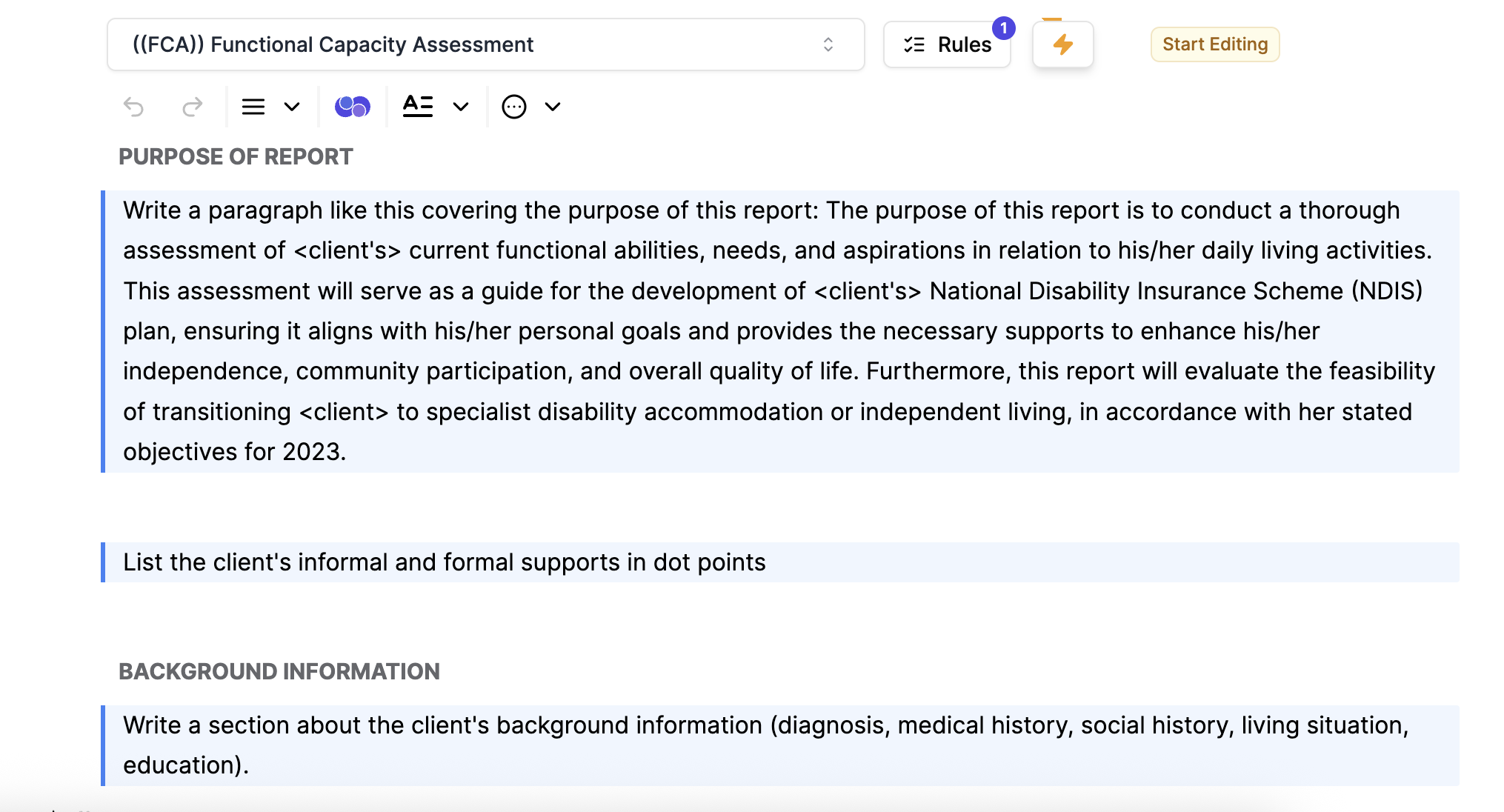
They are especially useful when combined with tools that support drafting and editing. A strong template plus a better starting point can dramatically reduce the effort needed to complete a report.
Everbility uses templates as a workflow tool, not just a formatting shortcut. The aim is to help therapists move through repetitive documentation more efficiently while still keeping full control over the final content.
Good templates do not make documentation generic. They make it easier for clinicians to spend time where nuance actually matters.