
- Published on
Can Therapists Use AI Ethically? A Practical View
- Authors
- Name
- Bella Martini
Introduction
Ethical concerns around AI in therapy are valid. Clinicians have responsibilities that go far beyond speed or convenience, and no new tool should be adopted without careful thought.
But ethical use is not the same as avoiding all use. In many cases, ethics depends less on whether AI is involved and more on how it is used.
Ethical Use Requires Oversight
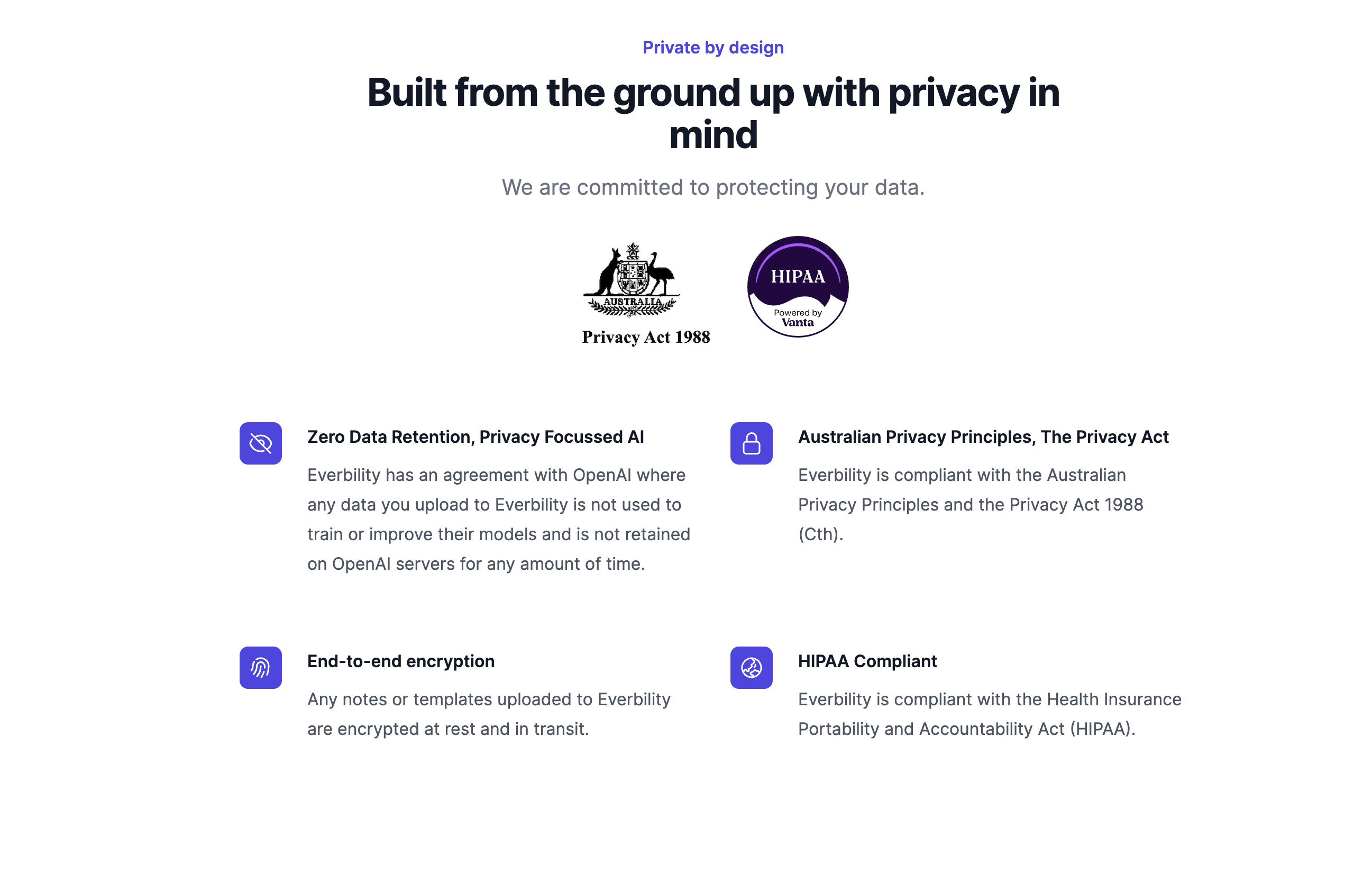
A practical ethical approach includes therapist oversight, careful review, appropriate editing, and a clear understanding that the clinician remains responsible for the final output. It also includes attention to privacy, data handling, and whether the tool is being used within appropriate boundaries.
AI becomes risky when it is treated as an authority. It becomes more useful when it is treated as support. If a tool helps organise rough material, accelerate drafting, or reduce repetitive work while leaving interpretation and decision making with the therapist, that is a very different scenario from handing over clinical judgment.
Support, Not Substitution
Therapists can use AI ethically when they remain active decision makers throughout the process. The role of the tool should be transparent, limited, and aligned with good professional practice.
That is why therapist-centered design matters. Everbility is strongest when it helps clinicians reduce admin friction while still keeping review, control, and professional reasoning at the center of the workflow.