- Published on
Why Blank-Page Friction Slows Therapist Documentation
- Authors
- Name
- Bella Martini
Introduction
Many therapists assume the hardest part of documentation is the total amount they need to write. In reality, one of the biggest hidden time drains is often the moment before writing starts.
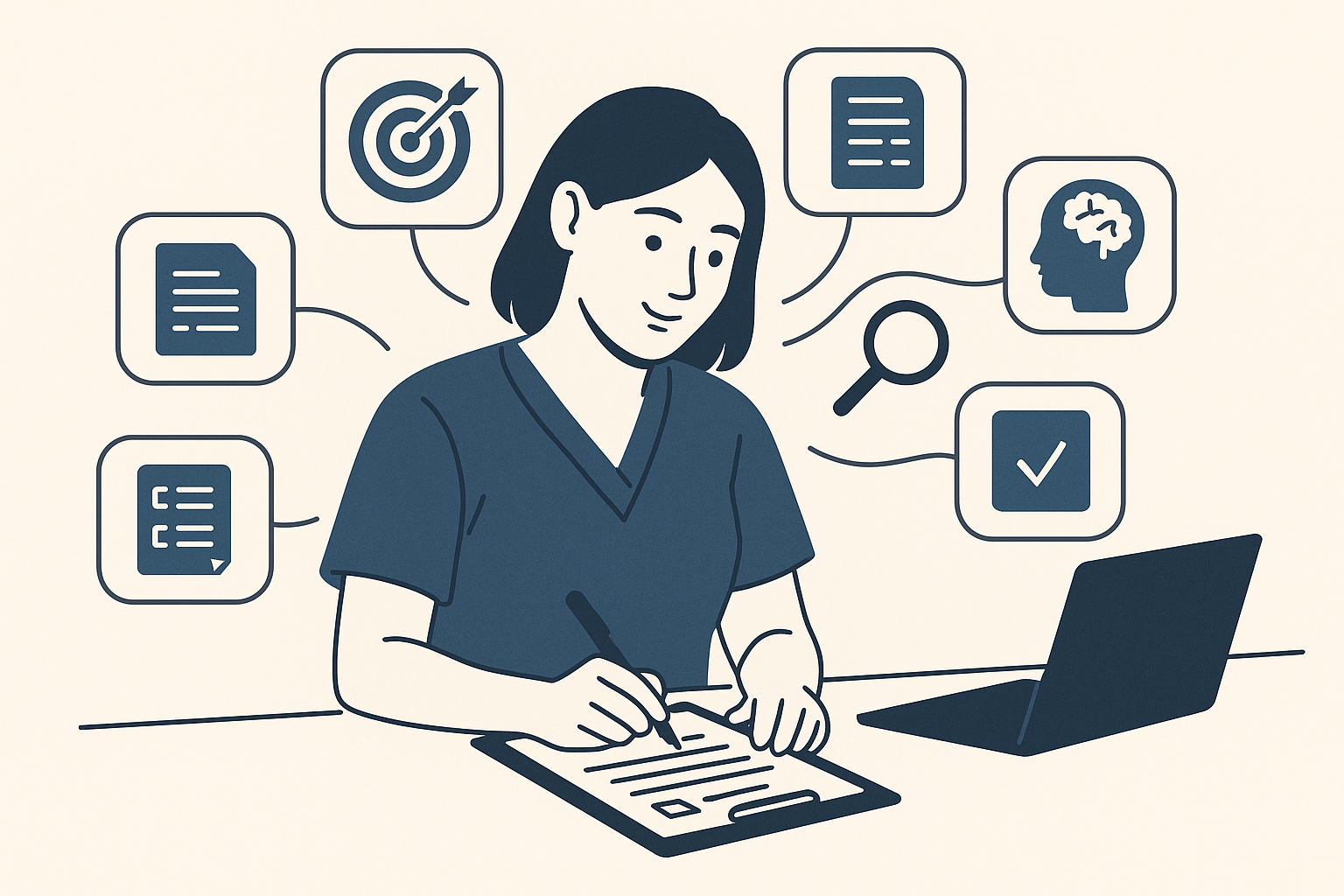
That blank page carries more weight than it should. At the end of a long day, when clinicians are already fatigued, starting from nothing can feel disproportionately hard. The therapist may know what happened in the session, what themes matter, and what needs to be communicated. The challenge is turning that mental picture into a structured first draft.
Why the Starting Point Matters
This is where friction builds. Documentation gets delayed, energy drops further, and the work becomes even more difficult to begin. Over time, that pattern can turn a manageable workflow problem into a persistent source of stress.
Reducing blank-page friction does not mean lowering standards. It means designing a better runway into the work. Quick capture methods, reusable templates, and AI-supported drafting all help clinicians move from raw information to a usable structure faster.
Better Systems Reduce After-Hours Work
The key is that therapists still review and shape the final output. The goal is not to bypass professional thinking. It is to remove the unnecessary activation energy required to begin.
When a system helps clinicians start faster, the ripple effects are significant. Documentation gets done earlier, after-hours work is reduced, and more mental space is available for care and communication.
This is one of the practical benefits of tools like Everbility. By supporting varied input types and faster drafting, it helps therapists get past the most avoidable barrier in documentation: the feeling of starting from zero.