- Published on
AI for Therapists Does Not Replace Clinical Judgment
- Authors
- Name
- Bella Martini
Introduction
- Clinical Judgment Still Belongs to the Therapist
- Why Therapists Are Right to Be Careful
- How Everbility Fits In
AI in therapy is often discussed in extremes. Some people assume it will replace professional thinking, while others assume it has no place in clinical work at all. In practice, neither view is very helpful.
For therapists, the more useful question is this: what role should AI actually play in day-to-day documentation and reporting?
The answer is support, not substitution.
Clinical Judgment Still Belongs to the Therapist
Clinical judgment depends on training, ethics, context, lived observation, and professional reasoning. Those things are not interchangeable with a software tool. A therapist still decides what matters in a session, what risks need attention, what language is clinically appropriate, and what recommendations are justified.
What AI can do well is reduce friction around the work that often slows therapists down. It can help turn rough notes into a structured starting point, support drafting, and make it easier to organise information that would otherwise stay scattered across documents, screenshots, voice notes, and memory.
Why Therapists Are Right to Be Careful
That distinction matters because many therapists are understandably cautious. Documentation affects continuity of care, communication with families and referrers, and often funding or medico-legal outcomes. No responsible clinician wants a tool that encourages blind trust.
Responsible AI use means the therapist remains in control. Output should be reviewed, edited, and checked for nuance, accuracy, and fit for the audience. The tool helps reduce the admin burden, but the therapist remains accountable for the final document.
How Everbility Fits In
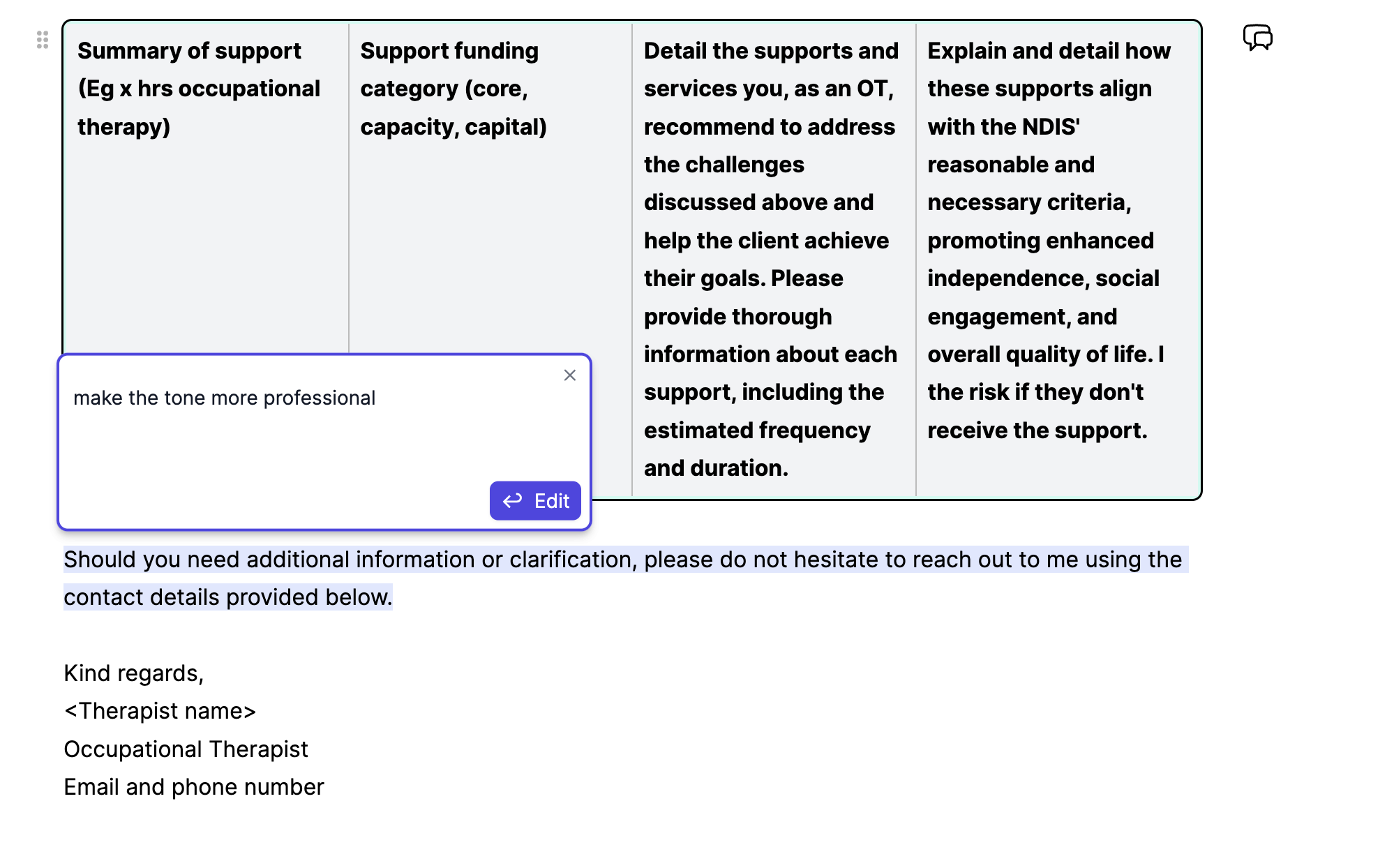
This is the model Everbility is built around. Rather than trying to replace the therapist, it is designed to support documentation workflows that are already clinically grounded. Therapists can capture information in different formats, use reusable templates, draft more quickly, and then review and refine everything in one place.
The value is not in handing over clinical thinking. The value is in giving clinicians a better starting point and a more sustainable process.
When AI is framed this way, the conversation becomes less about fear and more about fit. The goal is not to remove human expertise from healthcare. The goal is to reduce avoidable admin load so therapists can spend more of their time and energy on care, communication, and decision making.