- Published on
How Allied Health Practices Can Reduce Documentation Bottlenecks
- Authors
- Name
- Bella Martini
Introduction
When documentation slows down across a practice, it is easy to assume individual clinicians just need to get more efficient. In many cases, that is the wrong diagnosis.
Bottlenecks usually come from systems. Information is captured inconsistently, templates are weak or missing, documents start too late, and review takes place across too many disconnected tools.
Fix the System, Not Just the Symptoms
Practices can reduce these bottlenecks by focusing on a few core changes. First, improve capture so clinicians can get information out of their heads quickly. Second, create better repeatable structures for common documentation tasks. Third, make drafting easier so staff are not repeatedly starting from zero. Fourth, simplify review so quality control does not create its own backlog.
These are not small gains. When multiplied across a team, they can reduce delays, improve consistency, and lower the amount of admin that spills beyond working hours.
Support Better Practice-Level Workflows
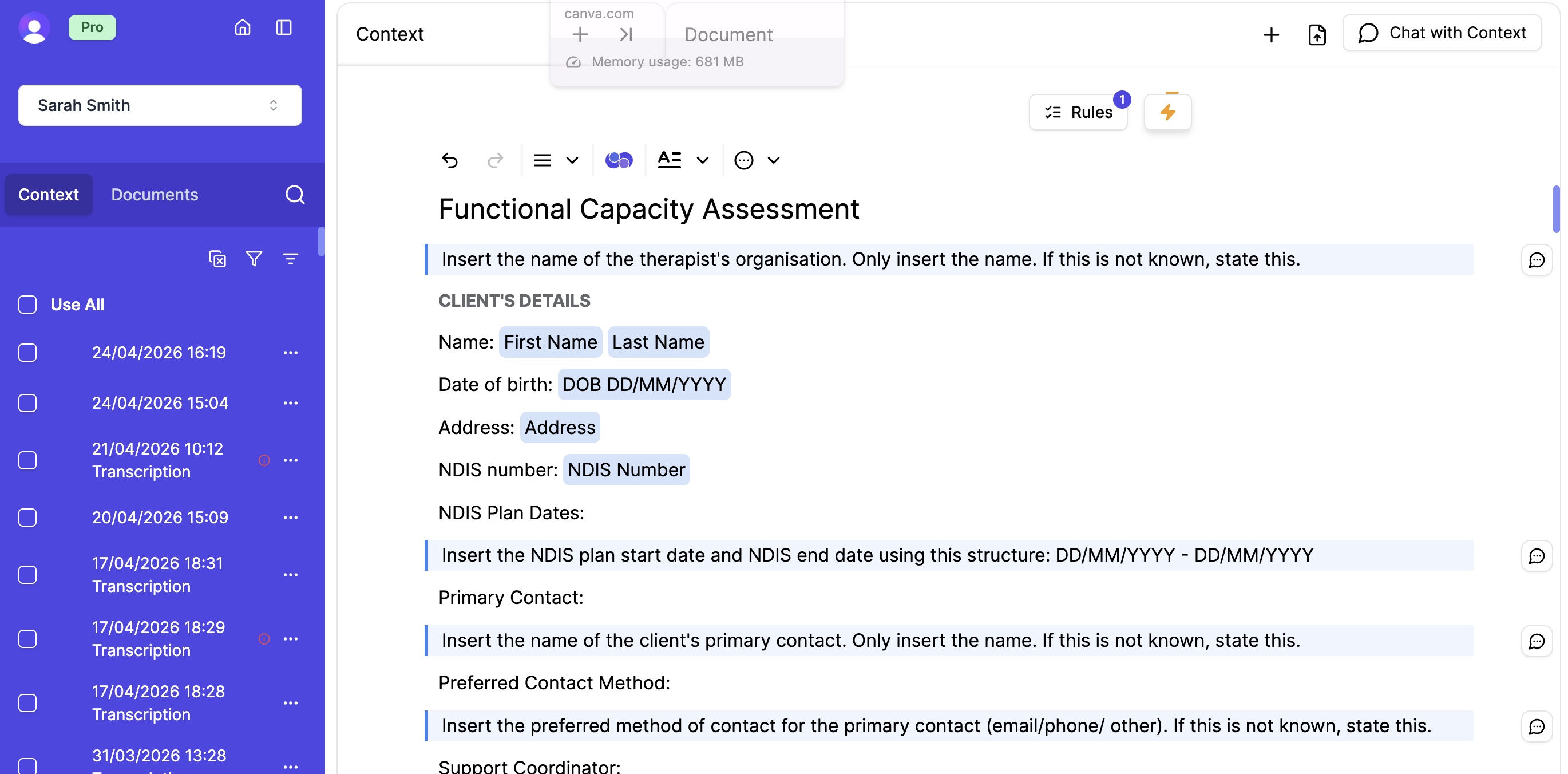
Everbility supports these improvements by giving allied health teams a more connected way to capture, draft, and refine documentation. That makes it easier to reduce friction at the practice level, not just the individual level.